MN8 Gardens
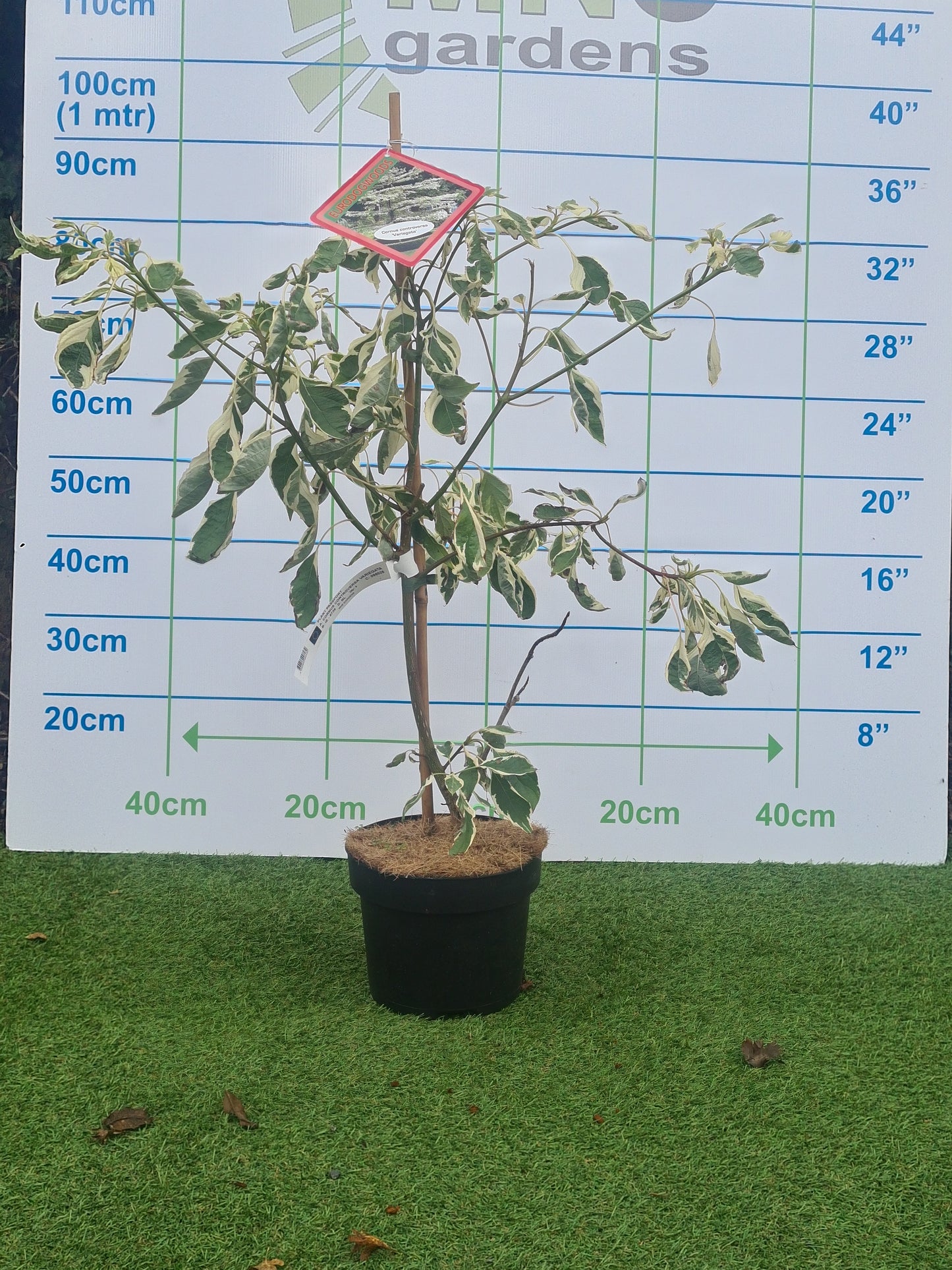
Cornus controversa 'Variegata' (Wedding Cake Tree)
Cornus controversa 'Variegata' (Wedding Cake Tree)
Couldn't load pickup availability
Cornus controversa 'Variegata' (Wedding Cake Tree) This stunning, slow-growing, deciduous tree is a magnificent specimen plant prized for its unique, architectural form. It is widely known as the 'Wedding Cake Tree' due to its distinct, gracefully tiered, horizontal branches.
Essential Characteristics
Habit: Features distinctive, horizontally layered branches that stack up like the tiers of a wedding cake, creating a beautiful silhouette year-round.
Foliage: Deciduous leaves are bright green with bold, creamy-white margins. The variegation remains clean and striking throughout the summer. In autumn, the leaves turn yellow (sometimes with hints of red-purple) before dropping.
Flowers: In late spring to early summer (May-June), the tiered branches are covered with showy, flattened clusters of tiny, creamy-white flowers, adding to the "frosted" effect.
Fruit: Flowers are followed by small, blue-black berries in late summer/autumn, which are a good food source for birds.
Size: A slow grower, eventually reaching an ultimate height and spread of about 15-25 ft (4–8m), though can grow larger in ideal conditions.
Growing Information
Light: Prefers full sun or partial shade. In hot summer climates, afternoon shade is appreciated to protect the variegated leaves from scorching and to maintain vibrant color.
Soil: Needs fertile, humus-rich, well-drained soil. It does best in soil that is slightly acidic to neutral (pH 5.0 to 7.5). Avoid dry or chalky soils.
Water: Requires consistent, medium moisture. Keep the soil evenly moist, especially when establishing (the first 3-4 years). Mulching helps keep the roots cool and retain soil moisture.
Hardiness: Fully hardy and reliable in temperate climates. It prefers areas with moderately cool summers.
Maintenance: Very low maintenance. No regular pruning is required as this would ruin its natural, tiered, architectural shape. Only remove any damaged, dead, or crossing branches during the dormant season (late autumn to early spring).
Placement: Best planted as a focal point or specimen tree in a lawn or border where its striking shape and variegation can be fully appreciated.
Pests/Disease: Can be susceptible to leaf spot and scale.